Co-editors
Stephen J. Collier, New School, New York
Christopher M. Kelty, University of California, Los Angeles
Andrew Lakoff, University of Southern California
Limn outlines contemporary problems. It draws material from networks of experts in the social and human sciences and is intended to be timely, diverse in perspective, authoritative, well written and beautifully designed. The focus is on contemporary problems in our global, politically interconnected, technologically intense culture: problems of infrastructure, ecological vulnerability, economic interdependence, and relentless technological invention A core goal of Limn is to provide genealogical framings that upset the often polarized, stale or static narratives offered in the media or public discussion. Contributors are chosen in light of these issues and because they can provide authoritative and unexpected insight into a problem more quickly and more accessibly than is possible through the current system of academic publishing.
Limn Issue 1: Systemic Risk
Editors: Stephen J. Collier, Christopher M. Kelty, and Andrew Lakoff
Systemic risk has become a central topic of expert discussion and political debate amidst the financial crisis that began in 2008, but it also has resonances across many other domains in which catastrophic threats loom – including internet security, supply chain management, catastrophe insurance, and critical infrastructure protection. In this issue, we invited scholars to contribute genealogical and conceptual framings that inform critical inquiry into this increasingly important concept. The result is not a traditional collection of academic articles but a set of brief, preliminary reflections, prepared on short notice, that address a common set of questions, along with a handful of documents, links, images and videos that illustrate different aspects of the concept.
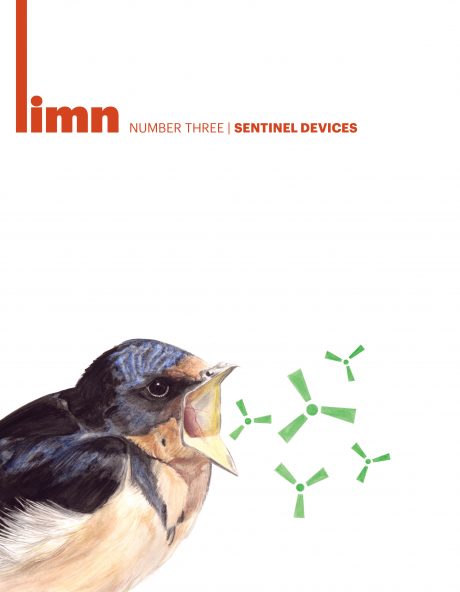
Limn Issue 3: Sentinel Devices
Editors: Frédéric Keck and Andrew Lakoff
The polar ice cap rapidly recedes; colonies of honeybees collapse in alarming numbers; androgynous fish are detected in rivers and streams. These reports not only describe recent events, but also function as signs of an ominous and rapidly encroaching future. In this issue of Limn we focus on how this future makes its appearance in the present. Many of the threats we now find most alarming-climate change, environmental radiation, emerging disease, endocrine disrupters, toxic chemicals-are not immediately perceptible to human senses. We rely on non-human indicators, whether animals or detection devices, to alert us to their possible onset.
Such indicators can be thought of as sentinels, or heralds of an approaching danger.
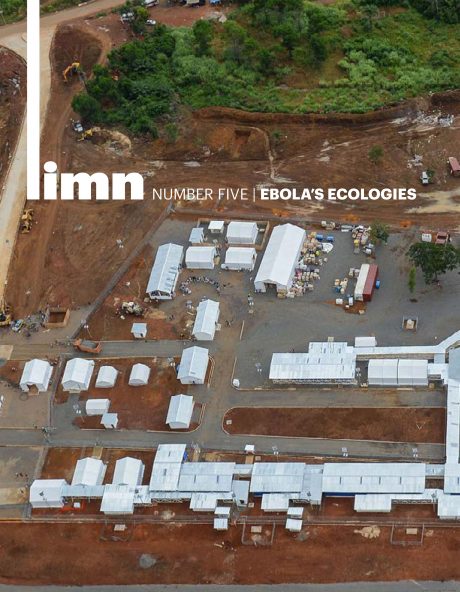
Limn Issue 5: Ebola’s Ecologies
Editors: Stephen J. Collier, Christopher M. Kelty, and Andrew Lakoff
This issue of Limn on “Ebola’s Ecologies” examines how the 2014 Ebola outbreak has put the norms, practices, and institutional logics of global health into question, and examines the new assemblages that are being forged in its wake. The contributions focus on various domains of thought and practice that have been implicated in the current outbreak, posing questions such as: What has been learned about the ambitions and the limits of humanitarian medical response? What insights are emerging concerning the contemporary organization of global health security? To what extent have new models of biotechnical innovation been established in the midst of the crisis?

